
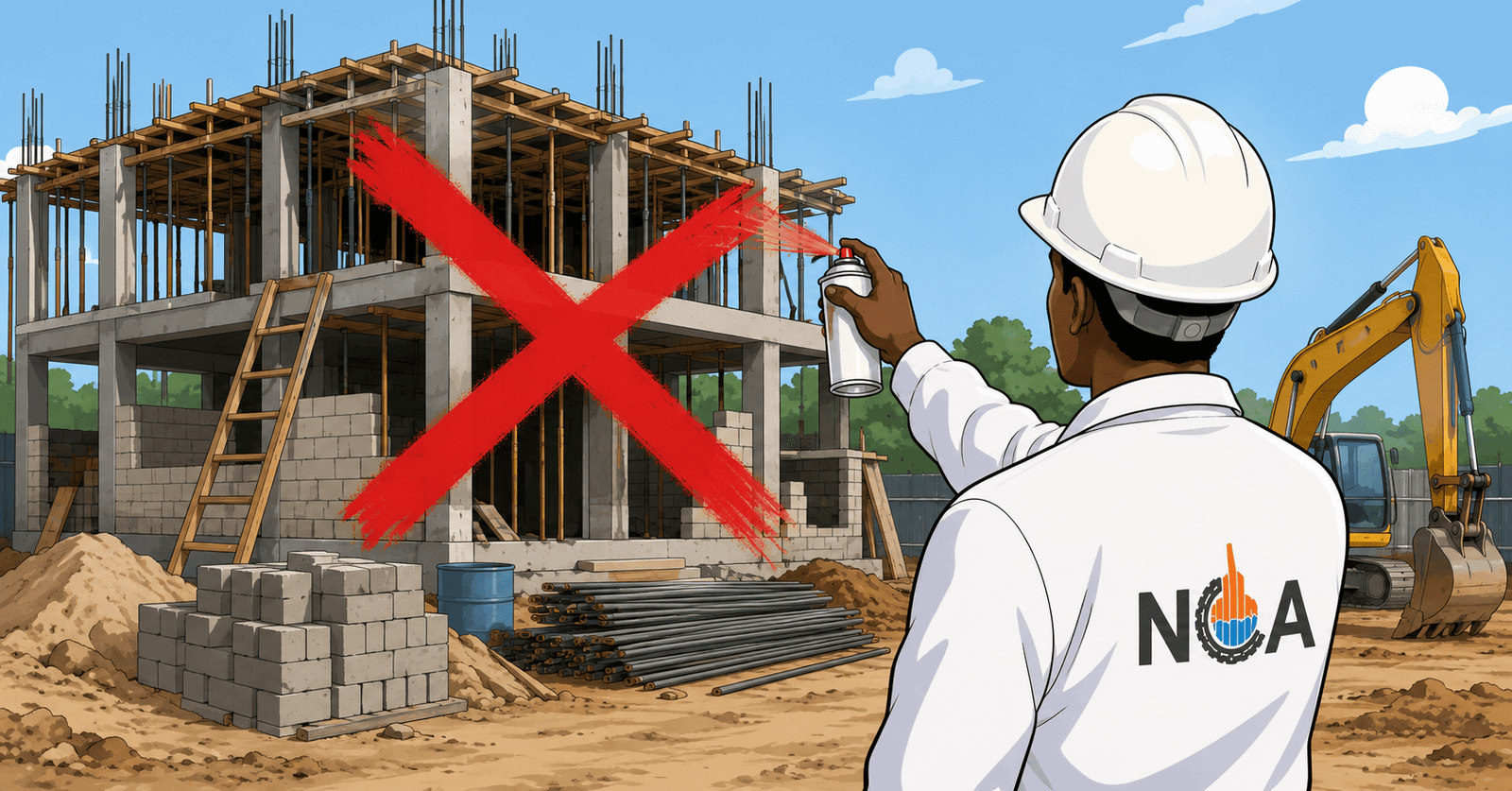
So you have the land, the drawings, and a contractor ready to start. Before anyone touches a spade, there’s one more question to answer: is the project actually NCA compliant? The National Construction Authority (NCA) is the body that registers every construction project in Kenya, and skipping this step is one of the fastest ways to see your site shut down mid-build. This guide walks through exactly what needs to be in place, registration, permits, and the site board, in plain language, before you break ground.
Why NCA Compliance Isn’t Optional
The NCA was set up to weed out unqualified contractors and reduce the shoddy work behind Kenya’s building collapses. In practice, that means every project, residential, commercial, or a simple boundary wall with a foundation, must be registered with the Authority before construction starts. Build without registration, and you’re not just risking a fine. You’re risking a stop-work order, demolition, or an invalidated insurance policy if something goes wrong on site.
The good news: the checklist is predictable. If you work through it in order, you avoid the back-and-forth that delays most projects.
Step 1: Confirm Your Land Ownership Is Airtight
Every approval that follows, county, NEMA, NCA, depends on proving you legally own or have authority over the land. This is the one step you can’t shortcut, because every other office will ask for it again.
Documents You’ll Need
- A clean, current title deed (or lease, for leasehold land)
- Land rates clearance certificate from the county
- A survey plan or Registry Index Map from the Survey of Kenya
Why This Comes First
Architects, county planning offices, and the NCA will all cross-check these documents. If there’s a dispute over the title or unpaid land rates, it surfaces here, far cheaper to resolve now than after foundations are dug.
Step 2: Line Up Registered Professionals
NCA compliance isn’t only about paperwork on your land, it’s about who’s building on it.
A Contractor With a Valid NCA Category
Contractors are registered under categories NCA 1 to NCA 8, based on financial capacity and technical experience, NCA 1 can handle projects of unlimited value, while lower categories are capped at smaller works. Ask to see your contractor’s current practising licence, not just proof they’ve applied. An unregistered contractor is operating illegally, and it’s typically the contractor’s responsibility to complete NCA project registration, but as the landowner, you carry the consequences if they haven’t.
Consultants With Current Practising Licenses
Your architect, structural engineer, and quantity surveyor each need a current licence from their respective professional body. Most will also need to issue a letter committing to supervise the project through construction, the NCA asks for this as part of registration.
Step 3: Secure County and NEMA Approvals
NCA registration comes after these two approvals, not instead of them.
County Development Permission
Your architectural drawings go to the county physical planning office for review against zoning rules, plot coverage, and setback requirements, then get stamped once approved. This stamped approval is a prerequisite for NCA registration.
NEMA Environmental Approval (When It Applies)
Projects near wetlands, forests, water bodies, or other environmentally sensitive areas need an Environmental Impact Assessment from a certified expert, submitted to the National Environmental Management Authority (NEMA). Not every project triggers this, but it’s worth confirming early, an EIA can take time, and starting it late is a common cause of delayed groundbreaking.
Step 4: Register the Project With the NCA
With ownership documents, a registered contractor and consultants, and stamped county approval (plus NEMA clearance, if required), you’re ready to register the project itself with the NCA, done online through their portal.
What the NCA Checks
Reviewers look at your approved drawings, your contractor’s registration status, your consultants’ licences, and confirmation of health and safety arrangements on site. They typically follow up with a physical site inspection to confirm what’s on the ground matches what’s on paper.
What You’ll Receive
Once satisfied, the NCA issues a compliance certificate along with a project registration number. That number is what goes on your site board, which brings us to the last, and most visible, requirement.
Step 5: Put Up the Site Board; Correctly
This is the requirement most landowners underestimate. A site board isn’t a nice-to-have sign; it’s a legal display of your compliance status, and NCA inspectors check it.
What the Board Must Show
Project and Client Information
The project name and the client’s (landowner’s) details need to be clearly stated.
The Design and Construction Team
This includes the architect, structural engineer, quantity surveyor, financier, and the registered contractor, named individually, not just “the design team.”
Registration and Approval Numbers
Your NCA project registration number must be displayed. This is what an inspector cross-checks against the Authority’s register on the spot.
Other Things That Should Be Visible On-Site
Alongside the board, keep hard copies of your stamped architectural and structural plans, your NCA and NEMA compliance certificates, and your OSHA (Occupational Safety and Health Act) site registration certificate somewhere accessible. Personal protective equipment for workers and proper hoarding around the site are also part of what an inspection looks for.
Compliance isn’t a one-time tick-box, either. If a previously compliant site falls out of line, say, the registered contractor is swapped for an unregistered one, the NCA can mark the site non-compliant and issue a suspension notice until it’s fixed.
What Happens If You Skip a Step
Landowners sometimes assume NCA registration is the contractor’s problem to solve quietly, or that a small project won’t attract attention. In reality, unregistered sites are routinely flagged during inspections, and the consequences land on the project: work stoppages, fines, forced demolition of unauthorised structures, and, because an unregistered contractor voids most insurance, no cover if there’s an accident or a collapse. None of this saves time compared to registering properly upfront.
Your Pre-Groundbreaking Checklist
- Clean title deed, land rates clearance, and survey plan
- A contractor with a current, valid NCA registration category
- Architect, engineer, and quantity surveyor with active practising licences
- Stamped county approval of your architectural and structural drawings
- NEMA environmental approval, if your site requires it
- Completed NCA project registration and compliance certificate
- A properly detailed site board displaying your NCA registration number
- OSHA site registration, PPE arrangements, and hoarding in place